Hey creative souls! Have you ever paused to truly consider how much the world of art has transformed right before our eyes? It’s not just about paintbrushes and canvases anymore, though those classics will always hold a special place in my heart.
Today, art education is a vibrant, evolving landscape, bursting with digital possibilities and incredible tools that redefine what it means to be an artist.
From what I’ve personally experienced, the journey of an aspiring illustrator in this era is truly exhilarating, blending timeless principles with cutting-edge technology.
It’s about more than just drawing; it’s about storytelling, branding, and carving out a unique visual voice that resonates across diverse platforms. The demand for skilled illustrators who understand both the art and the industry has never been higher, creating incredible career paths that didn’t even exist a decade ago.
We’re talking about everything from immersive digital experiences and AI-assisted creation to eco-art and mental health-focused artistic practices. If you’re passionate about bringing ideas to life visually and wondering how to navigate this exciting new frontier where traditional skills meet cutting-edge digital innovation, you’re in the right place.
Let’s explore this topic further and unlock the secrets to thriving in today’s creative ecosystem!
Embracing the Digital Canvas: Your Illustrator Journey in 2025

The Shifting Sands of Creative Education
It feels like just yesterday we were all scrambling for charcoal and a fresh ream of paper, right? But the art world, bless its ever-evolving heart, has truly transformed.
From what I’ve personally seen, today’s art education isn’t just about mastering traditional techniques anymore; it’s a dynamic, thrilling blend of classic foundations and cutting-edge digital wizardry.
Schools are finally catching on, integrating immersive experiences through augmented reality (AR) and virtual reality (VR) to give students a whole new dimension for creative expression.
Imagine being able to sculpt a digital model you can then 3D print, or stepping inside your own illustrated world! This exciting shift means we, as aspiring illustrators, need to be adaptable, always learning, and ready to embrace the tools that redefine what’s possible.
I’ve found that focusing on a balance between fundamental artistic principles and these new technologies is absolutely key to thriving in this brave new creative ecosystem.
It’s not about abandoning our roots, but about letting them grow into something even more incredible with digital branches.
Beyond the Brush: Storytelling in a Visual-First World
In this visually-driven era, an illustrator’s role extends far beyond just “drawing pretty pictures.” We are storytellers, brand builders, and experience designers.
Think about it: every scroll, every tap, every interaction online is a chance to tell a compelling story, and illustrations are at the forefront of that movement.
From what I’ve experienced, clients aren’t just looking for static images; they want visuals that captivate, educate, and resonate emotionally. This is why skills in visual communication, even basic UI/UX principles, are becoming so incredibly valuable.
When I started integrating motion graphics and interactive elements into my portfolio, I saw a huge jump in client interest. It’s about thinking about how your art will live and breathe across different platforms, whether it’s an animated sequence for a social media campaign or an interactive element in an app.
The demand for illustrators who can speak this multi-platform language is through the roof, creating career paths that simply didn’t exist a few years ago.
Navigating the Digital Toolbelt: Essential Software for Illustrators
The Industry Standards You Can’t Ignore
Let’s be real, software is our modern-day paintbrush and palette. If you’re serious about illustration today, you absolutely need to get comfortable with the industry-standard tools.
When I first started, Photoshop felt like a mountain to climb, but trust me, it’s worth it! Adobe Photoshop remains the undisputed champion for digital painting, photo manipulation, and just about everything in between.
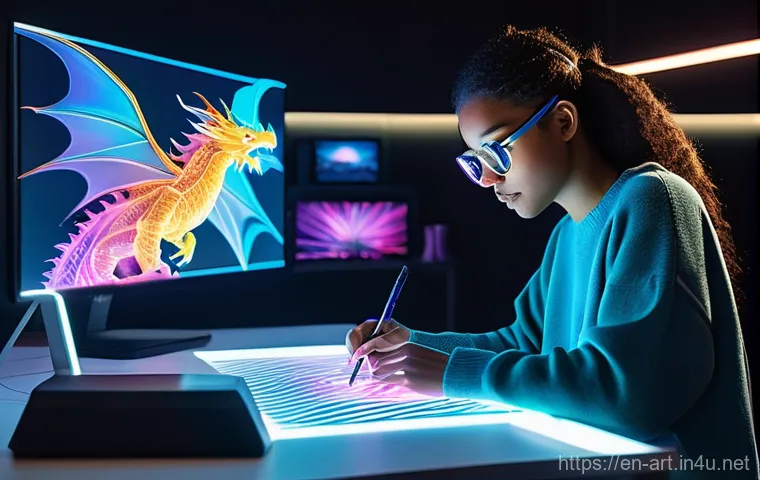
Its AI-powered features, like Generative Fill, are seriously game-changers, speeding up tedious tasks and letting us focus on the pure creative flow. Then there’s Clip Studio Paint, which I adore for its specialized tools, especially if you’re into comics or manga, and Procreate for those of us who love drawing on the go with an iPad.
I remember a few years back, I was trying to do all my sketching in Photoshop on my desktop, and it was such a clunky process. Switching to Procreate for initial ideation and then refining in Photoshop or Clip Studio Paint was a revelation – it completely transformed my workflow!
Free Powerhouses and Niche Wonders
Now, I know those professional suites can be a bit of an investment, especially when you’re just starting out. But don’t despair! There are some incredible free and open-source options that offer professional-grade features.
Krita, for instance, is often called the “open-source Photoshop” and it truly holds its own for digital painting, comics, and concept art. It’s fantastic for artists on a budget who still want powerful tools.
I’ve used Krita for personal projects, and the brush engine is surprisingly robust. Then you have tools like Blender, which isn’t just for 3D anymore; it’s a mixed-media playground where you can combine 2D drawings with 3D elements.
And for vector work or collaborative projects, Figma, especially with its AI plugins, is becoming a dark horse in the illustration space. The key is to find what complements your unique creative rhythm.
Don’t feel pressured to use *all* the tools, but definitely explore enough to find your perfect fit.
AI in the Illustrator’s Studio: Friend or Foe?
Leveraging AI for Efficiency and Inspiration
Okay, let’s address the elephant in the room: AI. When AI art first started making waves, I’ll admit, a part of me felt a cold dread. But after actually integrating some AI-powered tools into my workflow, I’ve come to see it less as a replacement and more as a powerful assistant, a creative collaborator.
AI excels at automating those repetitive, time-consuming tasks like background generation, colorization, or even generating preliminary sketches. This means I can spend more time on the truly conceptual and expressive parts of my work, the stuff that only a human touch can provide.
It’s like having an extra pair of super-fast, tireless hands in my studio. For example, I recently used an AI tool to generate a dozen different background variations for a character design, and it saved me hours of painstaking work, letting me focus on the character’s expression and pose.
Ethical Considerations and the Human Touch
But here’s the kicker: we can’t ignore the ethical concerns surrounding AI, especially regarding copyright and data scraping. Many AI models train on existing artworks without explicit permission, which definitely raises questions about ownership and fair compensation.
It’s a messy situation, and one we, as a creative community, need to navigate thoughtfully. My take? AI is a tool, and like any tool, its impact depends on how we wield it.
The undeniable truth is that the emotional depth, unique perspective, and nuanced storytelling that come from a human artist simply cannot be replicated by an algorithm, at least not yet.
While AI can create visuals, it often lacks the soul, the personal experience, and the cultural understanding that make art truly resonate. So, while I embrace it for efficiency, I always make sure my personal voice and human touch are front and center.
Building Your Illustrator Brand in a Crowded Digital World
Crafting Your Unique Visual Voice
In today’s bustling online landscape, standing out as an illustrator isn’t just about being good; it’s about being memorable. From what I’ve learned through trial and error, building a strong personal brand is absolutely critical.
This means defining your unique artistic style, knowing your target audience inside and out, and consistently communicating who you are as an artist. What themes do you explore?
What emotions do you want your art to evoke? My journey involved a lot of self-reflection to pinpoint what made my work *mine*. It’s not just about a logo or a slick website, though those help.
It’s about the narrative behind your work, the consistent aesthetic across all your platforms, and the distinct voice that shines through every piece you create.
When potential clients see consistency and authenticity, they’re much more likely to remember you and trust your vision.
Strategic Online Presence and Community Engagement
Once you’ve got your unique voice dialed in, it’s time to shout it from the digital rooftops! Building an online presence is non-negotiable for illustrators today.
I found that a professional website showcasing my best work is the cornerstone, but social media platforms are where the magic really happens for engagement.
Instagram, Twitter (or X, as it is now!), and Behance are fantastic for sharing your art, process videos, and behind-the-scenes glimpses. Engage with your audience, connect with fellow artists, and use relevant hashtags to boost your visibility.
I’ve personally seen how actively participating in online communities, offering feedback, and simply being present can lead to unexpected collaborations and amazing opportunities.
It’s not just about broadcasting; it’s about genuine interaction and building a supportive network.
Monetizing Your Artistic Passion: Beyond Client Work
Diverse Income Streams for Creative Freedom
Let’s talk money, honey! While client commissions are a fantastic way to earn, relying solely on them can be a rollercoaster. I’ve learned that the secret to a more stable and fulfilling creative career is diversifying your income streams.
Think about selling your art as prints, merchandise, or even digital assets like brushes and templates on platforms like Etsy, Redbubble, Creative Market, or Gumroad.
I once turned a series of whimsical character designs into a sticker pack, and it brought in a surprising amount of passive income! Many illustrators are also finding success with stock illustration sites like VectorStock, earning royalties each time their work is downloaded.
And don’t forget about teaching – online courses or workshops can be incredibly rewarding, both financially and personally.
Strategic Pricing and Smart Marketing
Knowing your worth and pricing your work strategically is crucial. This was a tough one for me initially, but researching what other artists in your niche are charging is a great starting point.
Don’t undervalue your time, skill, and creative energy! When it comes to marketing, it’s about more than just posting your art. Think about how your work solves a problem or adds value for your audience.
Can your illustrations help a small business tell its brand story? Can they brighten someone’s day? Platforms like Instagram are not just portfolios; they are marketing tools.
Showing your process, sharing personal stories behind your work, and creating engaging content that genuinely connects with people can dramatically increase your visibility and attract paying clients and customers.
| Digital Art Tool | Primary Use Cases | Key Benefits for Illustrators | Cost/Accessibility |
|---|---|---|---|
| Adobe Photoshop | Digital painting, photo manipulation, concept art | Industry standard, powerful AI features, seamless Adobe integration | Subscription (Creative Cloud) |
| Procreate | Mobile sketching, drawing, illustration on iPad | Intuitive interface, natural brushes, one-time purchase | One-time purchase (iPad only) |
| Clip Studio Paint | Manga, comics, animation, line art | Specialized tools for comic artists, versatile brush engine | One-time purchase or monthly plan |
| Krita | Digital painting, comics, concept art | Free and open-source, professional-grade tools | Free |
| Blender | 3D illustration, concept art, animation, game assets | Free and open-source, powerful 3D capabilities, mixed-media potential | Free |
| Figma (with plugins) | Vector-based illustration, UI/UX design, collaborative projects | Cloud-based, excellent for teamwork, growing AI plugin ecosystem | Free (starter), Paid (professional) |
The Rise of Conscious Creativity: Eco-Art and Well-being
Sustainable Practices in a Digital Age
As creatives, we’re becoming more aware of our impact on the world, and honestly, it’s about time. Sustainable illustration isn’t just a trend; it’s a movement towards mindful art-making, and it’s something I deeply resonate with.
It’s not just about using recycled paper or natural pigments (though those are fantastic!). It also extends to digital sustainability. For example, by moving away from physical materials, digital illustration dramatically cuts down on waste, making it inherently more eco-friendly.
I’ve personally started looking for brands that offer eco-friendly art supplies when I do use traditional media, and it’s a small change that feels good.
It’s about being thoughtful in every step of our process, from the energy efficiency of our studio setups to how we dispose of materials.
Nurturing the Creative Mind: Mental Health in Art
This is a topic very close to my heart. Being a creative is incredibly rewarding, but let’s be honest, it can also be tough on our mental health. The pressure to constantly produce original, high-quality work, inconsistent income, and the inevitable self-doubt can take a real toll.
I’ve certainly had my share of creative blocks and moments of imposter syndrome. Studies even suggest that creatives are more prone to certain mental health challenges due to emotional intensity and irregular work patterns.
That’s why actively nurturing our mental well-being is just as important as honing our artistic skills. Things like finding a work-life balance, seeking feedback without letting criticism crush you, and connecting with other artists for support can make a huge difference.
Remember, a healthy mind is a creative mind, and it’s okay to prioritize your well-being.
The Future is Bright: Evolving Career Paths for Illustrators
New Horizons in Visual Storytelling
The career landscape for illustrators is more diverse and exciting than ever before! It’s not just about children’s books and magazines anymore, though those are still fantastic avenues.
We’re seeing a huge demand for illustrators in emerging fields like UX/UI design, where our skills help create intuitive and beautiful digital experiences.
Motion graphics illustration is another booming area, blending traditional art with animation to create dynamic visuals for everything from explainer videos to social media content.
Personally, I’ve found great joy in exploring how my illustrations can bring complex ideas to life in animated formats. This expansion means illustrators can find niches that truly align with their passions, whether it’s concept art for gaming, fashion illustration, or even medical illustration.
Lifelong Learning and Adaptability are Key
If there’s one thing I’ve learned in this rapidly changing industry, it’s that lifelong learning isn’t just a buzzword; it’s essential for survival and growth.
The tools, trends, and even the definition of “art” are constantly evolving. To stay relevant and seize new opportunities, we need to be proactive. That means exploring new software, understanding how AI can augment our abilities, and staying curious about emerging visual storytelling techniques like AR and VR.
I try to dedicate a few hours each week to learning a new technique or exploring a new tool, and it keeps my work fresh and exciting. Adaptability is our superpower as creatives.
Embrace the changes, see them as opportunities to expand your skills and vision, and your journey as an illustrator will be an incredibly rewarding adventure.
글을 마치며
What an incredible journey it’s been, exploring the dynamic world of illustration in 2025! As we’ve journeyed through the shifting sands of creative education, the power of visual storytelling, the ever-evolving digital toolbelt, and the exciting yet challenging role of AI, one truth shines brightly: the future of illustration is vibrant, diverse, and undeniably human. I’ve personally found that the key to navigating this thrilling landscape lies in a blend of relentless curiosity, unwavering passion, and a genuine commitment to continuous learning. It’s about embracing innovation without losing sight of the core artistic principles that make our work resonate. Remember, every stroke, whether digital or traditional, carries your unique voice and perspective. Keep experimenting, keep growing, and never stop pouring your heart into the beautiful stories only you can tell through your art. The opportunities are boundless, and your creative impact is more significant than ever.
알아두면 쓸모 있는 정보
1. Mastering the Core Digital Suite: Truly becoming proficient in industry-standard software like Adobe Photoshop, Procreate, and Clip Studio Paint is non-negotiable for serious illustrators. These tools aren’t just programs; they are extensions of your creative hand, offering unparalleled power and flexibility for bringing your visions to life. Invest dedicated time in learning their advanced features, customizing your workflows, and understanding how they can streamline your entire process from initial sketch to final render, ultimately enhancing both efficiency and the quality of your output.
2. Embrace Lifelong Learning and Adaptability: The digital art world evolves at lightning speed, so commit to continuous learning as a core professional practice. Stay curious about new software releases, ethical AI applications, and emerging visual trends like augmented and virtual reality. Regularly attending webinars, taking specialized online courses, and actively following industry leaders and innovators will keep your skills sharp, your portfolio current, and open doors to new opportunities you might not even foresee today.
3. Cultivate a Distinct Personal Brand: In an increasingly crowded online market, your unique artistic voice and consistent personal brand are your most powerful assets. Spend dedicated time defining your signature style, understanding your ideal target audience, and consistently showcasing who you are as an artist across all your online platforms. A strong, authentic brand not only helps you stand out from the competition but also attracts clients and collaborators who truly resonate with your vision and aesthetic, leading to more fulfilling projects.
4. Diversify Your Income Streams: Relying solely on client commissions can create significant financial instability, making it wise to explore multiple avenues for monetization. Look into selling prints, creating merchandise, offering digital assets like custom brushes or templates, or even teaching online courses or workshops. This diversification not only provides a more stable financial foundation but also offers greater creative freedom, allowing you to pursue passion projects without the sole pressure of client demands.
5. Prioritize Your Mental Well-being: The creative path, while incredibly rewarding, can also be mentally and emotionally demanding. Actively manage your mental health by establishing clear work-life boundaries, seeking out supportive communities, and practicing self-compassion. Recognizing the signs of burnout, taking regular breaks, and connecting with other artists for shared experiences and encouragement are crucial steps. Remember, a balanced and nurtured mind is the fundamental engine for sustained creativity and long-term success in this passion-driven field.
중요 사항 정리
The journey of an illustrator in 2025 is one defined by thrilling innovation and the enduring power of human creativity. It’s about skillfully blending traditional artistic sensibilities with cutting-edge digital tools, strategically leveraging AI as an assistant, and constantly adapting to new technologies. Building a robust personal brand that authentically reflects your passion, diversifying your income streams, and actively nurturing your mental well-being are not merely suggestions but crucial pillars for a fulfilling and successful career. Remember that your unique perspective, emotional depth, and inherent ability to tell compelling stories are irreplaceable; these are the qualities that will always set your art apart in an increasingly digital world, ensuring your place as a vital visual storyteller.
Frequently Asked Questions (FAQ) 📖
Q: I love the feel of traditional art, but I know digital is huge now. How do I actually blend my traditional art skills with all these new digital tools without losing my unique touch?
A: Oh, this is a question super close to my heart because it’s exactly what I’ve been exploring in my own journey! For the longest time, I thought it was an either/or situation – either you’re a purist with paintbrushes or you’re glued to a screen.
But what I’ve personally discovered is that the magic truly happens when you bring them together. Think of your traditional skills as your artistic bedrock; they give you that fundamental understanding of form, light, and color that no software can fully replicate.
I often start with a good old-fashioned pencil sketch on paper. There’s something so raw and immediate about that first stroke. Then, I’ll snap a quick photo with my phone or do a high-quality scan and bring it into my favorite digital painting software, like Procreate or Photoshop.
This is where the fun really begins! I can refine lines, experiment with endless color palettes without fear of ‘ruining’ the original, and add incredible textures that I might have created with traditional mark-making, scanned, and layered in.
It’s like having a superpower to enhance and iterate on your initial vision. Many digital programs even offer brushes that brilliantly mimic watercolors, oils, or pastels, giving you that familiar feel in a digital space.
What I’ve found is that this hybrid approach not only makes my workflow incredibly efficient but also pushes my creativity into directions I never would have imagined with just one medium.
It’s about letting each method highlight the strengths of the other, giving your art a unique depth that truly stands out.
Q: The world of illustration seems to be exploding with new possibilities! What are some of the most exciting new career paths for illustrators today, beyond just ‘drawing’?
A: You are so right, it’s an exhilarating time to be an illustrator! Gone are the days when ‘illustrator’ meant solely drawing for books or magazines – although those are still incredibly valuable fields.
From what I’ve been seeing and experiencing, the landscape has broadened immensely. We’re now talking about visual storytellers who are absolutely essential in almost every industry.
Think about how much content we consume digitally! This has opened doors to roles like UI/UX Illustrator for apps and websites, creating engaging visual elements that enhance user experience.
Then there’s the burgeoning field of Motion Graphics Illustrator, where your drawings come to life in animations for commercials, explainer videos, or even movie title sequences.
And let’s not forget Concept Artists in the gaming and film industries, designing characters, environments, and props that build entire worlds. Beyond screens, illustrators are now heavily involved in Product and Packaging Design, bringing brands to life with captivating visuals, and even in Augmented Reality (AR) experiences, creating digital overlays that interact with the physical world.
I’ve even seen illustrators venturing into Eco-Art and Mental Health-focused artistic practices, using their skills to communicate important messages and foster well-being.
The key is that your core skill – translating ideas into compelling visuals – is more in demand than ever. It’s about finding where your unique visual voice can solve a problem or tell a story, whether it’s on a cereal box, a mobile game, or an immersive art installation.
It’s truly a choose-your-own-adventure career path now!
Q: With
A: I art becoming so prevalent, how can I make sure my art stands out and genuinely connects with people in this digital age? A3: This is probably the hottest topic buzzing around the art world right now, and I completely get why it raises concerns.
I’ve personally grappled with this question myself. But here’s my take, from the heart: AI is a tool, and like any tool, it can be used for amazing things, but it can’t replicate the spark of human experience and emotion.
To truly stand out in this evolving landscape, you need to lean into your humanity, not away from it. First, cultivate an authentic, distinct style. Make your art unmistakably you.
When someone sees your work, they should feel your personality, your unique perspective, your soul. That’s something an algorithm just can’t synthesize.
Second, focus on storytelling and emotion. Why do we love certain pieces of art? Because they make us feel something.
AI can generate pretty images, but it struggles with the nuanced emotional depth, the personal narrative, or the lived experience that fuels truly resonant art.
Share your process, your inspirations, your struggles – that personal connection builds trust and engagement. Third, consider blending skills in unexpected ways.
Maybe it’s combining your digital painting with physical mixed media, or perhaps it’s using AI as a starting point for brainstorming but then infusing the work with intense human refinement and detail that makes it your own.
Lastly, and this is crucial for connecting with people: build genuine relationships. Engage with your audience, share your journey, and create a community around your art.
People buy from people, and they support artists whose stories they connect with. While AI can create a vast quantity of images, it can’t build a genuine, lasting connection like a human artist can.
Your unique story, your personal touch, and the emotions you pour into your work are your superpowers in the age of AI. Never forget that.